Rodent Control in Houston, TX for Complete Rodent Protection
Scratching over the ceiling at night, droppings behind the pantry, or a chewed wire you cannot explain. Rats and mice do not leave on their own, and trapping them without sealing the way in only clears space for the next one. We find the entry points, remove the population, and close the gaps for good.
Get in touch
What Is Professional Rodent Control and Who Needs It in Houston?
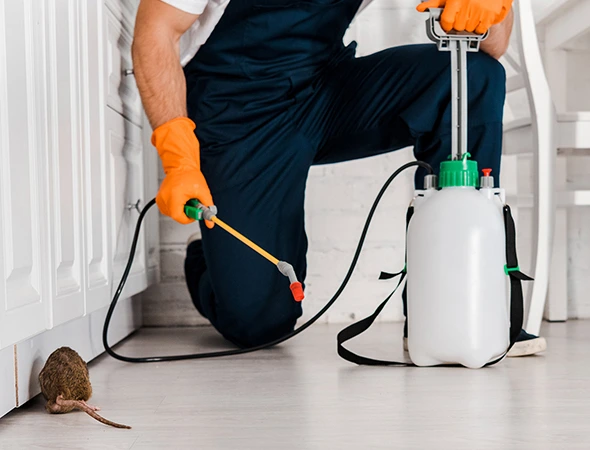
Professional rodent control removes the animals inside and seals the openings they used to enter. The service includes identifying the species, inspecting the attic, wall voids, roofline, and foundation, setting traps based on activity, sealing entry points, and cleaning contaminated insulation when needed. Signs include nighttime movement, droppings, gnaw marks, unusual odors, or pets focusing on one area.
AJ Pest Control Services treats rodent problems as structural issues, not just trapping jobs. We identify whether you have roof rats, Norway rats, or house mice before choosing trap locations and methods. Entry sealing is included, using durable materials such as hardware cloth, copper mesh, and sheet metal. We also explain whether attic insulation requires removal or targeted cleaning.
Our Services
Rodent work almost always uncovers something else, because the gaps that let a rat in are the same gaps everything else uses. Here is the full range of what we handle and how each connects to a rodent problem.
Roach Control
Our core service on this page and the one most Houston attic calls turn into. We identify the species, map the entry points, run a trapping program sized to the population, and seal the openings with materials that cannot be gnawed. Follow-up visits confirm the count is at zero before the job is closed.

Rodent Control
Rodent droppings and soiled insulation create exactly the food and moisture source American and smokybrown cockroaches look for, so attics with rodent history often have roach activity too. We identify the species and treat the harborage rather than the surfaces. The same sealing work that stops rats also closes the gaps roaches use.

Spider Control
Spiders concentrate where insects concentrate, and cluttered garages and storage areas with rodent activity usually have both. We clear webs and egg sacs, treat harborage points, and reduce the insect population underneath so the spiders lose their food supply.

Wildlife Removal
If the noise in your attic is heavier and slower than a rat, it is probably not a rodent at all. Our wildlife work covers inspection, humane trapping, exclusion, damage assessment and sanitation. The exclusion principle is identical, just applied to larger openings.

Raccoon Removal
Raccoons tear open soffits and rooflines to get into attics, and the holes they leave behind become easy entry points for roof rats long after the raccoon has gone. We remove the animals, check for dependent young first, then repair and seal the damage properly.

Squirrel Removal
Squirrels are the most common animal mistaken for rats in a Houston attic, and the difference is usually the time of day you hear them. Squirrels are active in daylight, rats after dark. We handle removal and roofline sealing as one job so the gnawed opening does not stay open.
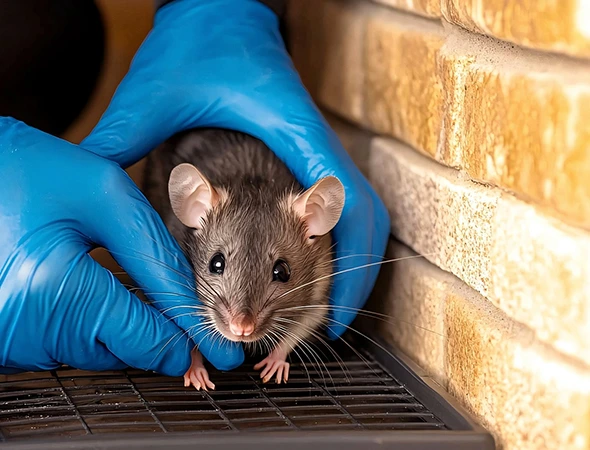
Benefits of Our Rodent Control Service
1. Traps go where the species actually travels: Roof rats move along rafters and wall tops while Norway rats stay at ground level, so a trap line set at the wrong height in the wrong part of the building will sit empty for weeks while the population keeps growing.
2. We work around how rats behave, not against it: Rats treat any new object in their runway as a threat and can avoid it for several days, so we pre-bait traps unset until the rats feed confidently and then arm them, which is the difference between a slow trickle and a fast clear-out.
3. Exclusion is included in the job: Sealing entry points with hardware cloth, copper mesh and sheet metal is part of the work rather than a separate quote, because trapping without sealing removes this year’s rodents and leaves the door open for next year’s.
4. Entry points get found, not guessed at: A mouse fits through a quarter-inch gap and a rat through half an inch, so we inspect the roofline, soffits, weep holes, utility penetrations, garage door seal and foundation rather than assuming the obvious hole is the only one.
5. The mess gets dealt with too: Rodents leave droppings, urine and nesting material through attic insulation, and we assess whether that material needs removing and sanitizing rather than sealing the attic up with the contamination still inside it.
Work Process
Our Work Process
Inspect and map the entry points
We confirm the species from droppings, gnaw marks and rub marks, then work the attic, wall voids, roofline, soffits, weep holes and foundation to find every opening. You get told where the gaps are and which ones are active before any trap is placed.
Trap the population
Traps are set on confirmed runways at the height the species uses. For rats we pre-bait unset traps for a few days first so their wariness of new objects does not stall the job. Mice are usually trapped straight away, since they investigate new objects within a day.
Seal, clean and check back
Once the catch rate drops to zero we seal every entry point with chew-proof materials, assess the insulation for contamination, and return to confirm nothing has reopened. Sealing before the animals are out would trap them inside the wall, so the order matters.
Rat Control in Houston, TX
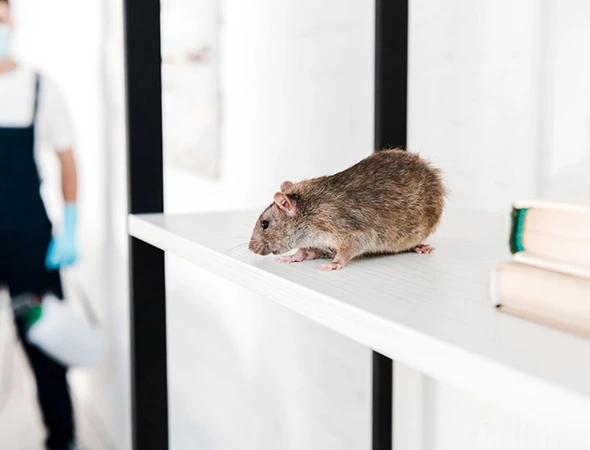
Houston has two rat species, and identifying the right one determines the treatment. Roof rats climb into attics and upper floors, while Norway rats stay near foundations, drains, and crawl spaces. Heavy rain can push rats indoors by flooding burrows and sewer lines. Our rat control targets their actual travel routes, then seals the entry points they use.
Telling them apart before treatment:
| Roof Rat | Norway Rat | House Mouse | |
|---|---|---|---|
| Body size | 6 to 8 inches, tail longer than body | 7 to 10 inches, tail shorter than body | 2.5 to 4 inches |
| Build | Slender, large ears, pointed nose | Stocky, small ears, blunt nose | Small, large ears, pointed nose |
| Where it lives | Attics, wall tops, upper floors, trees | Ground level, burrows, sewers, crawl spaces | Wall voids, cabinet bases, behind appliances |
| Droppings | About half an inch, pointed ends | About three quarters of an inch, blunt ends | An eighth to a quarter inch, like dark rice |
| Usual way in | Roofline, soffits, overhanging branches, cables | Foundation gaps, weep holes, drains, sewer lines | Any gap from a quarter inch upward |
| Smallest gap it fits | About half an inch | About half an inch | About a quarter inch |
| Response to a new trap | Avoids it for several days | Avoids it for several days | Usually investigates within a day |
Mouse Control in Houston, TX
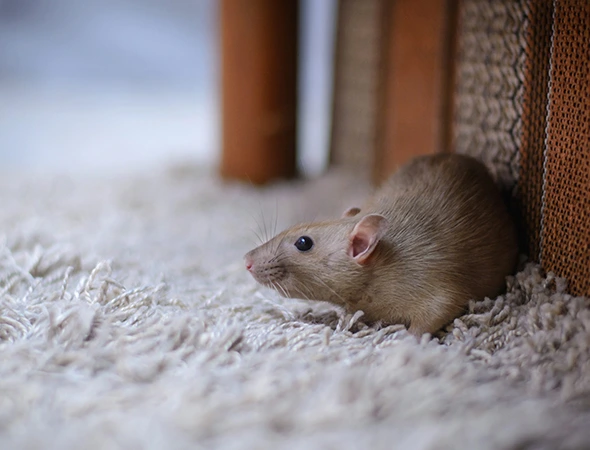
Mice can become a serious problem quickly because they can squeeze through gaps about a quarter-inch wide. They also reproduce rapidly, with females reaching breeding age in about six weeks. Their frequent droppings can quickly appear in cabinets, drawers, pantries, and other areas where food is stored.
Because mice usually stay close to their nest, trap placement is critical. We place multiple traps along walls, behind appliances, and near areas showing activity. We also seal small entry points around plumbing, dryer vents, garage doors, and utility penetrations, then clean contaminated areas to help prevent continued activity.
Rodent Exclusion and Entry Point Sealing in Houston, TX
Exclusion determines whether a rodent problem stays gone or returns. Rodents constantly gnaw because their incisors keep growing, which is why materials such as expanding foam, plastic sheeting, caulk, or steel wool alone often fail. Proper exclusion uses durable materials such as hardware cloth, copper mesh, sheet metal, and mortar, secured without exposed edges.
We commonly seal gaps around soffits, rooflines, gable and ridge vents, brick weep holes, garage doors, AC lines, plumbing penetrations, and damaged fascia. We also trim branches and vines that give roof rats access to the roof. Addressing these routes helps prevent rodents from simply finding another way inside.
Attic Rodent Cleanup and Insulation Sanitation in Houston, TX
Removing rodents does not remove the contamination they leave behind. Droppings, urine, nesting material, and food caches can remain in attic insulation, where Houston humidity can hold moisture and odors. Rodent waste may carry pathogens, while disturbed dry droppings can release particles into the air. Soiled insulation also loses insulating value and can attract rodents back through lingering scents.
We assess the affected areas, remove and bag contaminated insulation when necessary, sanitize surfaces, and deodorize to reduce lingering odors. If contamination is limited, targeted spot cleaning may be enough. We recommend only the level of cleanup your attic actually needs rather than automatically requiring a full insulation removal.
Frequently Asked Questions
The time of day tells you almost immediately. Squirrels are active in daylight, so noise in the early morning and late afternoon usually means squirrels. Rats are nocturnal, so movement that starts after dark and quietens by dawn points to rodents. Squirrel noise also tends to be heavier rolling and scampering, while rats sound like lighter scratching and running along a fixed path.
We generally advise against it indoors. Poisoned rodents die inside wall voids and under floors where you cannot reach them, and the smell can last several weeks with no way to resolve it except opening the wall. There is also a secondary poisoning risk to pets, owls and hawks that catch a weakened rodent. Trapping gives you a body you can remove and a clear count of what has been caught.
No, and doing it in that order causes a worse problem. Sealing a building with rodents still inside traps them in the wall voids, where they die and create an odour issue, and desperate animals often gnaw new openings trying to get out. The correct sequence is always to remove the population first, confirm the catch rate has reached zero, and seal after that.
The smell comes from a carcass in an inaccessible void and usually peaks over one to two weeks before fading over several more. We can often locate the source closely enough to make a small access cut, remove the carcass and treat the area, which resolves it immediately. Where the location cannot be pinpointed, we treat and ventilate the void and deal with the entry points so it does not happen again.
Usually not. Most standard policies in Texas exclude damage caused by rodents and insects on the basis that it is a maintenance issue rather than a sudden event. There can be an exception where rodent gnawing causes a covered peril, such as a fire started by chewed wiring, in which case the fire damage may be covered even though the gnawing is not. Check your own policy wording, since exclusions vary between insurers.
Hearing Something in the Attic? Let Us Find Out What It Is.
Rats, mice and squirrels all sound similar through a ceiling, and the treatment for each one is different. Book an inspection and we will tell you what is up there, how it got in, and what it takes to close the entry points properly. Same-day service is often available across Houston and the surrounding areas.
Phone: (832) 538-7583
Email: ajpestcontrolservices26@gmail.com
Send A Message
About Us
AJ Pest Control Services is a locally owned pest control company based in northwest Houston, and rodent work is where the difference between companies shows most clearly. We do not consider a rat or mouse job finished until the entry points are sealed with materials that cannot be chewed through. Call or text (832) 538-7583 to book an attic and entry point inspection.
Areas We Are Serving
We handle rodent control across Houston and ten surrounding communities in Harris, Fort Bend and Montgomery counties. The pressure differs by area. Katy and other flood-affected parts of the metro see rodent surges in the weeks after heavy rain as burrows and sewer lines are pushed out. Spring, The Woodlands and other neighborhoods with mature tree cover deal with far more roof rat activity, because branches overhanging a roofline are a direct bridge into the attic. Older housing stock in Missouri City and Pasadena tends to have more structural gaps for both rats and mice to use.
Response is fastest in Cypress and the northwest Houston corridor, where we are based. Send us your zip code and we will confirm the next available inspection slot.