
Pest Control in Katy, TX

In Katy the weather sets the pest calendar. Heavy rain floods sewers, storm drains and ground burrows, and the rats and American cockroaches living in them come up and move into the nearest dry building. That pattern repeats after every major storm, not just the historic ones.

We treat Katy with that cycle in mind, which means sealing the building rather than just treating what you can see.

Get in touch

Pest Control Services Throughout Katy, TX

Katy is one of the larger areas we cover and one of the more complicated, because a Katy postal address can put you in Harris County, Fort Bend County or Waller County depending on which side of a road you are on. We work the whole footprint across 77449, 77450, 77493 and 77494, from the established sections around Nottingham Country, Kelliwood and Cinco Ranch through to the newer western communities like Cross Creek Ranch, Elyson and Firethorne. 

At AJ Pest Control Services, our base is about fifteen miles east, so Katy is a regular run rather than an occasional one. What shapes our work here more than anything is water. Parts of Katy sit inside the flood pools behind the Addicks and Barker reservoirs, and a much larger share simply drains slowly in heavy rain. Whether a property has ever taken water in the house or not, the drainage infrastructure around it is what pushes pests indoors, and that is where our inspections start.

Our Services

Roach Control

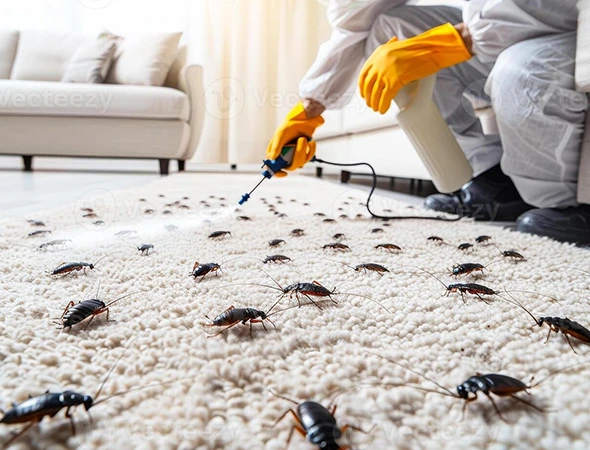
American cockroaches are the classic Katy post-rain call, arriving through floor drains, plumbing gaps and weep holes straight from flooded storm sewers. German roaches are a separate indoor problem and often arrive with a move, which happens a lot in an area taking thousands of new households a year. The two need completely different treatment.

Rodent Control

Our highest volume Katy service after a wet spell. Storm water pushes Norway rats out of burrows and sewer lines, and they move up into attics, garages and wall voids. Roof rats are a separate issue in older Katy sections with mature canopy. We identify the species, trap the population, then seal the entry points so the next storm does not simply refill the space.

Spider Control

Wet weather concentrates insects, and spiders follow their food supply indoors alongside everything else. Master-planned community landscaping with dense planting and irrigation supports large insect populations year round. We identify what you have, remove webs and egg sacs, and reduce the insects underneath.

Wildlife Removal

Katy wildlife work comes from two directions. Rising water drives animals out of creek corridors and detention basins toward houses, and active land clearing on the western edge displaces them from open ground. We inspect, remove humanely, then seal the openings, because removal alone leaves the door open.

Raccoon Removal

Raccoons work the bayou and detention basin corridors that run through most Katy communities, and they use uncapped chimneys and soffit gaps to get into attics. We check for dependent young before setting anything, remove the family together, then rebuild and seal the access point.

Squirrel Removal

Squirrel work concentrates in the older Katy sections where the tree canopy has reached the rooflines, so Nottingham Country, Kelliwood and mature parts of Cinco Ranch see more of it than the newest phases. We remove them, rebuild the gnawed soffit in heavy gauge metal, and check the attic wiring.
Why Do Pests Get Worse in Katy After Heavy Rain?

Because flooding does not create pests, it relocates them. Norway rats live in ground burrows and sewer lines. American cockroaches live in storm drains, sewers, water meter boxes and mulch beds. When those spaces fill with water, everything in them is pushed out at once and heads for the nearest dry, elevated shelter, which is your home. This is well documented locally. After Hurricane Harvey, Houston pest control operators reported rodent numbers at levels they had not seen in around 35 years, with displaced rats moving up into attics.

Katy has more of this than most of the metro for a structural reason. The Addicks and Barker reservoirs were built in the 1940s to protect downtown Houston, and they are dry fields most of the year that are designed to fill during major storms. Local and county authorities permitted roughly 30,000 homes and businesses at the edges of those pools over the following decades. So a large number of Katy properties sit in ground that is engineered to hold water.

How Much of Katy Is Actually Affected by Flooding?

More than most residents realize, and the official numbers are worth knowing. A Harris County Flood Control District analysis after Hurricane Harvey found that more than 25,000 homes flooded across the Addicks, Barker and Buffalo Bayou watersheds. The reservoirs held around 140 billion gallons during that storm, and roughly 14,000 properties upstream of the dams were inundated according to reporting on the resulting litigation.

A 1996 study had already warned that continued development behind the reservoirs could expose as many as 25,000 homes and businesses in the fringe areas, and noted that the maximum flood pool levels extend well beyond the land the government actually owns. The part that still applies today is the legal outcome. A federal judge ruled that the Army Corps holds a permanent flowage easement over properties inside the reservoirs up to the pool elevation reached during Harvey, which means those areas can lawfully be flooded again.

What Should I Expect in the Weeks After a Katy Storm?

Pest pressure after flooding arrives in stages rather than all at once, and each stage has a different fix. Knowing the sequence tells you when to act. The single most valuable moment is during repair work, when the walls are still open.

Timeframe What is happening What should be done
First 48 hours Rats and American roaches are pushed out of burrows, sewers and storm drains and move to the nearest dry structure, usually upward Secure food and bins, note where activity appears, do not seal anything yet
Week 1 to 2 Mosquitoes breed in standing water, ant colonies relocate to structures, roach sightings climb sharply Exterior perimeter and drain treatment, clear standing water, check weep holes
Week 2 to 6 Displaced rodents settle into attics and wall voids and begin breeding. Attic noise usually starts here Attic inspection, trapping program, map every entry point
During repair work Cut-out sheetrock, lifted baseboards and new penetrations open routes that did not exist before the flood Seal penetrations before the walls close up. This is the cheapest exclusion you will ever get
Month 2 to 6 Moisture held in wall voids and under slabs sustains roach activity long after surfaces look and feel dry Moisture point inspection, targeted harborage treatment rather than surface spraying
6 to 12 months Pressure returns to normal if the building was sealed. If it was not, the whole cycle repeats at the next storm Exclusion audit, confirm repairs held, review drainage and landscaping

Frequently Asked Questions

Yes, and mainly it changes the emphasis. Properties inside a reservoir pool sit on ground designed to hold water, so we weight the work toward physical exclusion and drain treatment rather than surface application that a wet season will undo. That means sealing weep holes, plumbing and utility penetrations, garage door seals and floor drain access, and treating the exterior harborage where displaced pests stage before entering. The judge in the upstream litigation confirmed the Corps can lawfully flood these areas again, so building this into the property is a long-term decision rather than a one-off.

Contact Us

Post-rain rodent and roach surges are the most predictable pest event in this part of the metro, and the fix is sealing the building rather than chasing what you can see. Call and tell us what you have noticed and roughly when it started.
If repair work is underway at your property, mention that when you call. It changes what we can do and when.

Phone: (832) 538-7583
Email: ajpestcontrolservices26@gmail.com

Send A Message

Areas

Yes. Katy is one of ten communities we serve from our northwest Houston base, across Harris, Fort Bend and Montgomery counties.

Houston is covered as well. Because Katy stretches across three counties and well past the city limits, send us your zip code if you are unsure and we will confirm.