Raccoon Removal in Houston, TX for Safer Homes and Attics
Heavy footsteps overhead, a torn soffit, or scratching down the chimney flue. Raccoons are the largest animal that gets into Houston attics and the only one that regularly brings a litter with it. We check for young before we trap anything, remove the family together, then repair and seal the opening so it cannot happen again.
Get in touch
What Is Raccoon Removal and Who Needs It in Houston?
Raccoon removal involves safely getting raccoons out of a structure, then repairing and sealing the entry point. Unlike general wildlife problems, raccoons can create their own openings, use attics and chimneys for nesting, and leave behind contaminated areas. Common signs include heavy movement overhead, chittering sounds, damaged soffits or vents, muddy tracks, and strong odors.
Houston’s climate affects raccoon activity throughout the year. Births peak in March and April, while extreme summer attic temperatures often push raccoons toward cooler spaces such as decks, sheds, and crawl spaces. AJ Pest Control Services checks for young before removal, includes entry repairs in the work, and follows Texas Department of Agriculture requirements for handling and relocating live raccoons.
Our Services
A raccoon in the roof is rarely the only thing going on up there. Here is everything we handle and how each connects to a raccoon problem.
Roach Control
Raccoon waste and soiled insulation create the food and moisture source that draws cockroaches into an attic. Once the wildlife side is resolved we identify the species and treat the harborage rather than spraying surfaces.

Rodent Control
Raccoon damage opens the roofline wide, and rats move into the same attic through the gaps a raccoon left behind. We trap the population and seal those openings with materials rodents cannot gnaw through.

Spider Control
An attic with animal activity supports insects, and insects support spiders, which is why post-wildlife attics often hold heavy webbing. We identify what is present, remove webs and egg sacs, and reduce the insect base.

Wildlife Removal
Our category hub covering the full process that applies to any animal in a structure, from inspection through exclusion to attic restoration. Worth reading if you are not yet certain what is up there or you want the complete picture of how these jobs run.

Raccoon Removal
The service on this page. Inspection for entry points and dependent young, humane removal of the whole family together, repair of the torn soffit or vent they came through, and sanitation of the areas they used. Timing is set by the nesting calendar rather than by our schedule.

Squirrel Removal
The other common attic animal in Houston and often confused with raccoons at first. Squirrels are smaller, active in daylight rather than at night, and use much smaller openings. Their removal and sealing work is covered on the squirrel page.
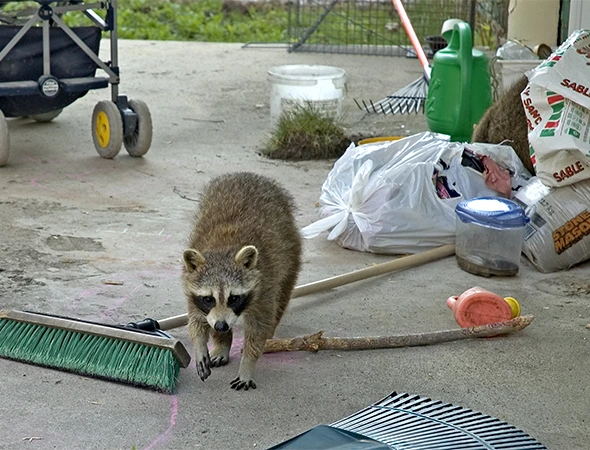
Benefits of Our Raccoon Removal Service
1. Kits are found before anything is trapped: Between March and June there is a real chance a female raccoon in your attic has a litter with her, and removing her alone leaves helpless young sealed in your ceiling, which is both cruel and an odor problem you will be living with for weeks.
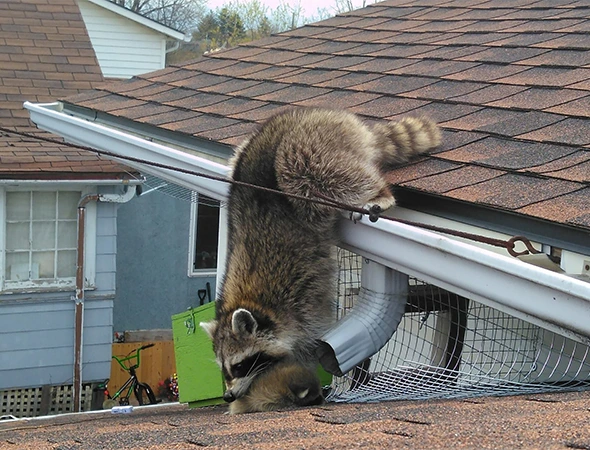
2. The damage gets repaired, not just covered: Raccoons pull soffit panels down and tear vents open with their hands, so the repair needs carpentry and heavy gauge metal rather than a screen stapled over a hole that the next animal will simply pull off again.
3. We work to the Houston nesting calendar: Peak births here are March and April rather than the later dates quoted in national advice, so knowing the local timing tells us straight away whether a one-way door is safe to fit or whether hand removal is the only responsible option.
4. Contamination is handled as a health issue: Raccoons establish latrine areas in attics and their waste can carry roundworm eggs that the CDC identifies as a cause of serious illness, so cleanup is done with proper equipment rather than a bag and a broom.
5. You stay on the right side of Texas law: Texas restricts who may transport a live raccoon and how far it can be moved, so working with a licensed operator protects you from advice that sounds humane but is actually an offense.
Work Process
Our Work Process
Inspect the roof and check for young
We work the roofline, soffits, vents and chimney to find the entry point, then inspect the attic for the den site, latrine areas and any sign of a litter. Whether kits are present decides the entire method, so this comes before anything else.
Remove the family together
With no young present, a one-way door usually lets the adult leave on its own. Where a litter is present, the kits are removed by hand and used to draw the mother out, so nothing is separated and nothing is left behind.
Repair, seal and sanitize
We rebuild the damaged soffit or fascia, fit heavy gauge screening and metal flashing to the vents and openings, cap the chimney, then assess the contamination and remove soiled insulation where it is warranted.
Raccoon Removal from Attics in Houston, TX
Most Houston raccoon problems occur in attics, and the noise often provides the first clue. Raccoons are nocturnal and heavy, so homeowners may hear slow walking, thumping, or dragging around dusk and overnight. They can enter by pulling loose soffits, lifting shingles, damaging gable vents, or opening gaps where rooflines meet.
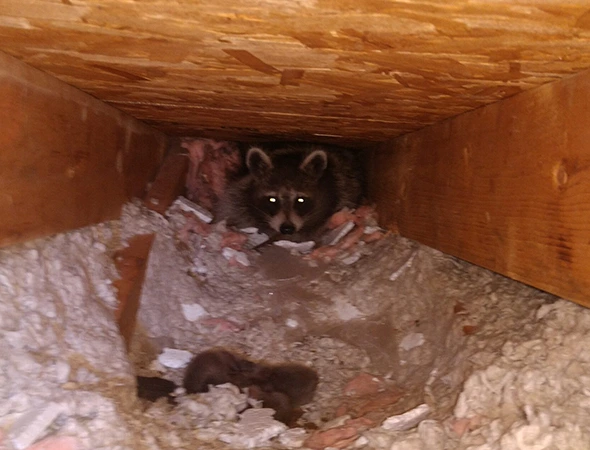
Once inside, raccoons can flatten insulation, create nesting areas, damage flexible ductwork, and occasionally chew wiring. Our attic work includes finding entry points, checking for kits, removing the animals, repairing damaged soffits or vents, and addressing contaminated insulation and latrine areas.
Raccoon Removal from Chimneys in Houston, TX
An uncapped chimney is an ideal nesting site for raccoons. The dark, dry flue and smoke shelf provide shelter from predators, while the rough masonry makes it easy for raccoons to climb in and out. Because chimney sounds travel directly into the room, homeowners may hear chittering or crying and mistake it for birds.
Chimney removal requires extra care because young are often present and adults have little room to escape. We remove kits by hand when needed, use them to safely draw the mother out, and clear nesting material from the flue. We then install a fitted stainless steel chimney cap to prevent future entry.
Raccoon Nesting Season and Baby Raccoon Removal in Houston, TX
Timing matters with raccoon removal because Houston’s peak birthing season is March and April. Mothers typically have two to five kits, which remain dependent on her for several weeks. Young raccoons generally begin leaving the den with their mother around eight to ten weeks, creating a long period when they cannot safely be excluded.
That is why we inspect for kits before installing any one-way door. If young are present, we remove them by hand and use them to bring the mother into a trap, keeping the family together. When the kits are nearly mobile, we may time exclusion around their natural departure. This approach prevents trapped young, roof damage, and costly odor problems.
Frequently Asked Questions
Please do not. A fire in a flue with a raccoon on the smoke shelf usually kills kits that cannot climb out, leaves you with carcasses in an enclosed space, and can drive a panicked adult down into the room through the damper. Nesting material packed onto a smoke shelf is also a genuine chimney fire risk in its own right. The flue needs to be cleared by hand, the animals removed, and a proper cap fitted afterwards.
Usually not, and this is one of the most common worries we hear. Daytime activity is normal for a nursing mother who needs more food than a night of foraging provides, and for juveniles learning to forage in late summer. Raccoons are classed as a high risk rabies species in Texas, but the raccoon rabies variant found in the eastern United States is not established here, and Texas raccoon cases are typically spillover from the skunk variant. What does warrant concern is genuinely abnormal behavior such as staggering, circling, aggression without provocation or apparent paralysis. Keep well clear and call animal control if you see any of that.
Unprovoked attacks are rare, but a cornered raccoon and a mother defending kits are both entirely capable of causing serious injury, and this is the main reason we advise against DIY removal during nesting season. Cats and small dogs are at real risk in a direct confrontation, and any bite or scratch to a pet should go to a vet promptly because of rabies protocol. The practical advice is to give a raccoon a clear exit route and never position yourself between an adult and the den site.
These sometimes move an animal a few feet and almost never solve the problem, and during nesting season they can make things considerably worse. A disturbed mother frequently responds by moving her kits deeper into the structure, into a wall void or soffit run where they become genuinely unreachable. Mothballs are also being used illegally when applied this way, since it is against the label. If the animal does leave, the opening is still there and unsealed, so another one arrives.
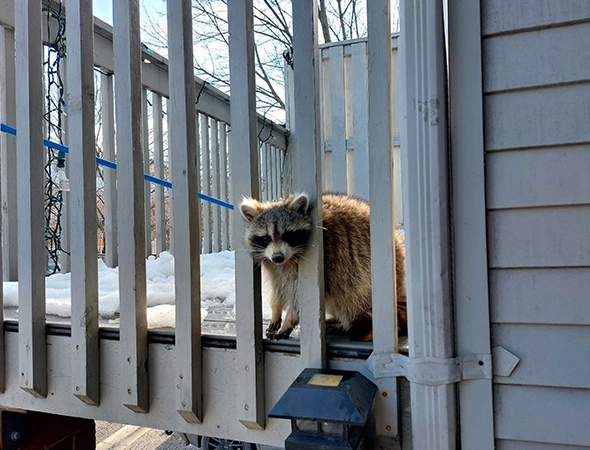
Probably not yet, and we will tell you that rather than book a job. Yard-level raccoon activity is usually managed with secured bins, removing pet food and fallen fruit, and taking down bird feeders overnight. What is worth doing is a preventive check of the roofline, because a raccoon already comfortable on your property is one that will investigate the roof eventually. Trimming branches back from the roof and capping the chimney before nesting season is far cheaper than removal afterwards.
Raccoon in the Attic? Do Not Block the Hole Yet.
Between March and June there is a real chance she has kits up there, and sealing the opening traps them inside. Call us and we will inspect the roofline and attic, confirm whether young are present, and give you a fixed quote covering removal, repair and sealing together.
Phone: (832) 538-7583
Email: ajpestcontrolservices26@gmail.com
Send A Message
About Us
AJ Pest Control Services is a locally owned pest control and wildlife removal company based in northwest Houston. On raccoon jobs we check for kits before we set a single trap, because getting the timing wrong on a nesting mother creates a far worse problem than the one you called about. Call or text (832) 538-7583.
Areas We Are Serving
We handle raccoon removal across Houston and ten surrounding communities in Harris, Fort Bend and Montgomery counties. Raccoon pressure follows tree canopy and water more than anything else. The Woodlands has the heaviest activity in our service area, where dense mature canopy sits directly against rooflines and gives raccoons a bridge onto the roof without ever touching the ground. Spring and Tomball are close behind for the same reason. Humble and areas near Lake Houston see additional pressure from proximity to water, which raccoons strongly favor. Newer construction in Cypress and Katy sees displaced animals moving into houses built on cleared habitat.
Response is fastest in Cypress and the northwest Houston corridor, where we are based. Call with your zip code and we will confirm the next available slot.